Attics have a reputation for being gloomy, and it is often undeserved. Most of the light the room is ever going to get is already coming in; what happens afterwards is a matter of styling. Light arrives through roof windows and dormers at a steep, awkward angle, it lands in the middle of the floor rather than on the walls, and everything in the room either helps it travel or stops it dead. The following seven choices are the ones that do the most damage. None of them requires structural work, and most cost less than a new armchair.
1. Choosing a "clean white" that turns grey in attic light
White paint is the default answer for a dark room, and it is a good one — but not every white behaves the same way up here. In a room with one or two windows, much of the light arrives cool and indirect, and a white with a blue or slate base can read as a shadow on the sloped walls, especially in a north-facing attic. Choosing a white with a warm base often makes the walls look brighter than a pure white does.
Look at the light reflectance value on the back of the paint card before you commit. It runs from 0 to 100, and the higher the number, the more light the surface sends back into the room. A dead-matte finish absorbs more than people expect, too. An eggshell on the walls and a low-sheen finish on the ceiling both give you a slight bounce without looking glossy.
Keep the ceiling the lightest surface
If your ceiling or roof slope is a shade darker than the walls, it will always feel like a lid. Paint the slope and ceiling in the lightest tone in the room, and let the walls sit half a shade deeper if you want a little definition.
2. Draping the brightest window in the room
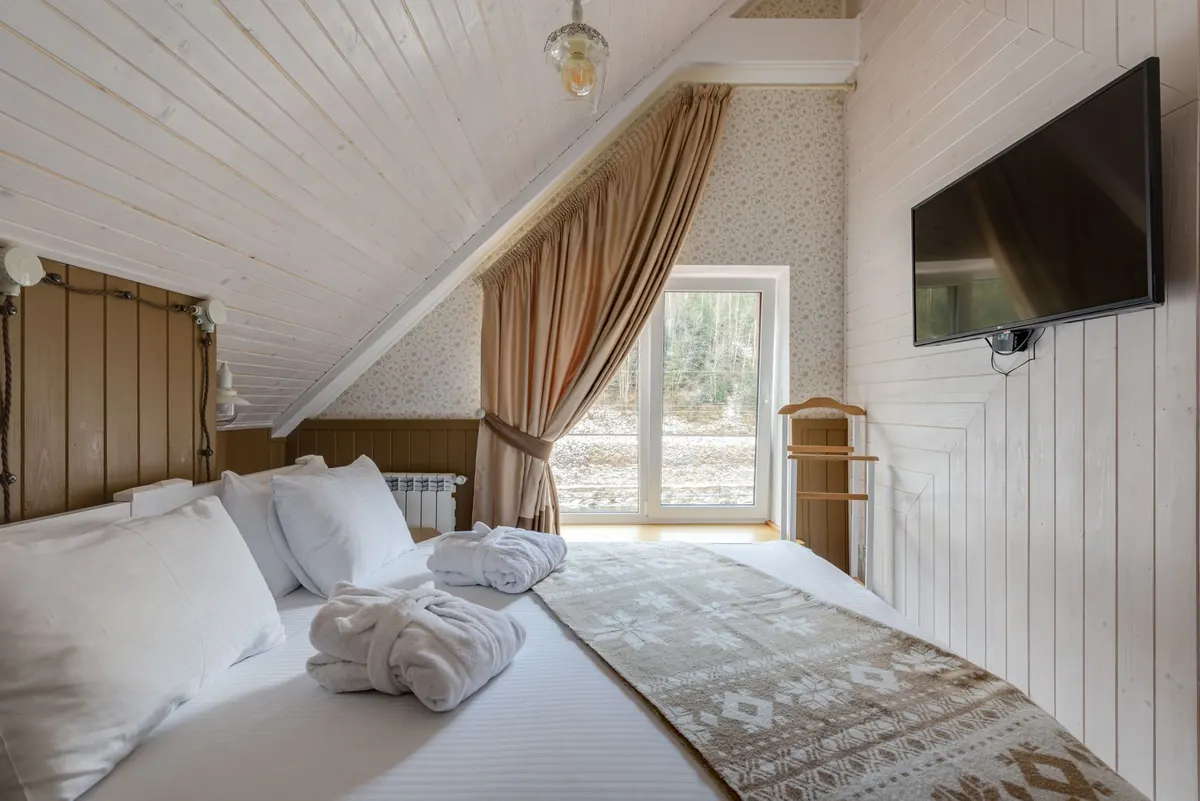
Curtains are usually chosen for privacy or warmth, then forgotten. In an attic, the mistake is nearly always the same: a pole fixed inside the window reveal, so the fabric covers part of the glass even when the curtains are open. Add a valance or a pelmet, and you have built a canopy over your best source of daylight.
Move the pole or track outwards and upwards instead — roughly 15 to 20 centimetres beyond the edge of the reveal, and close to the ceiling or the start of the slope. The panels then stack against the wall rather than across the glass, and the window keeps its full width. In an attic, that extra width matters more than in any other room.
For fabric, light linen, cotton voile or a fine wool in a pale or mid tone will diffuse light rather than block it. If you need darkness for sleep, line the curtains in a light colour and keep the blackout layer separate, or use a slim blind that disappears fully into the recess when it is rolled up. For roof windows, choose a blind that sits flush and rolls back to nothing; anything with a bulky cassette will clip a few centimetres off the light every day of the year.
3. Putting the tallest, darkest furniture where the light lands
A tall wardrobe under the window is the quiet killer of attic brightness. It blocks the wall that receives the most light, casts a long shadow across the floor and forces everything else into a dimmer corner. The same goes for a deep bookcase pushed against the brightest wall, or a bed pressed against a low knee wall with dark bedding and a high headboard.
Keep the window wall low. A bench, a shallow chest of drawers, a desk with an open frame — anything below sill height will let light pass over it and into the room. Reserve the tall pieces for the wall opposite the window, or for the recessed storage under the eaves where the doors can be painted the same colour as the wall so they stop reading as solid blocks.
In the shadowed zone under a slope, pale painted furniture, glass, cane and light timber all behave better than dark stained wood. A dark piece can still earn its place, but put it where the light already falls.
4. Letting the floor swallow the light
Floors do more of the work in an attic than people give them credit for, because that is where most of the daylight actually lands. Dark floorboards, a deep brown carpet or a large navy rug will take that light and keep it. A single oversized dark rug can undo the effect of an otherwise pale room in one afternoon.
You don't have to rip anything up. Swap a large dark rug for a pale wool or cotton one with a smaller footprint, and leave a visible border of floor around it so the light has somewhere to spread. Natural fibres in oatmeal, sand or pale grey are forgiving and easy to live with. If your boards are dark, a pale limewash or a light-toned finish will change the room more than any other single job. Bear in mind that very pale floors show marks — a mid-tone in a matte finish is the practical compromise.
5. Treating lighting as one bulb in the middle of the ceiling
A single pendant hanging from the highest point sounds sensible and rarely works in an attic, because the geometry is against it: the fitting hangs low over the middle of the room, casts light downwards and leaves the slopes and corners untouched. Recessed spots set into a slope have a similar habit, creating bright pools and dark gaps in between.
Layer the light instead, and use one warm colour temperature throughout so the room reads as a single space after dark:
- Ambient: a pair of low-hung pendants or a wide, shallow ceiling fitting rather than one small bulb.
- Washing: a floor uplighter aimed at the roof slope, so the largest surface in the room glows instead of sitting in shadow.
- Task: a wall light or clip-on reading lamp beside the bed, and a small lamp on the desk.
- Low level: a table lamp on a chest or in the dark corner where nothing else reaches.
Use warm white bulbs around 2700K to 3000K, keep the shades opaque enough to hide the bulb from eye level, and fit a dimmer if you can. A bright room at night is a matter of layers, not wattage.
6. Painting the slope as though it were just another wall
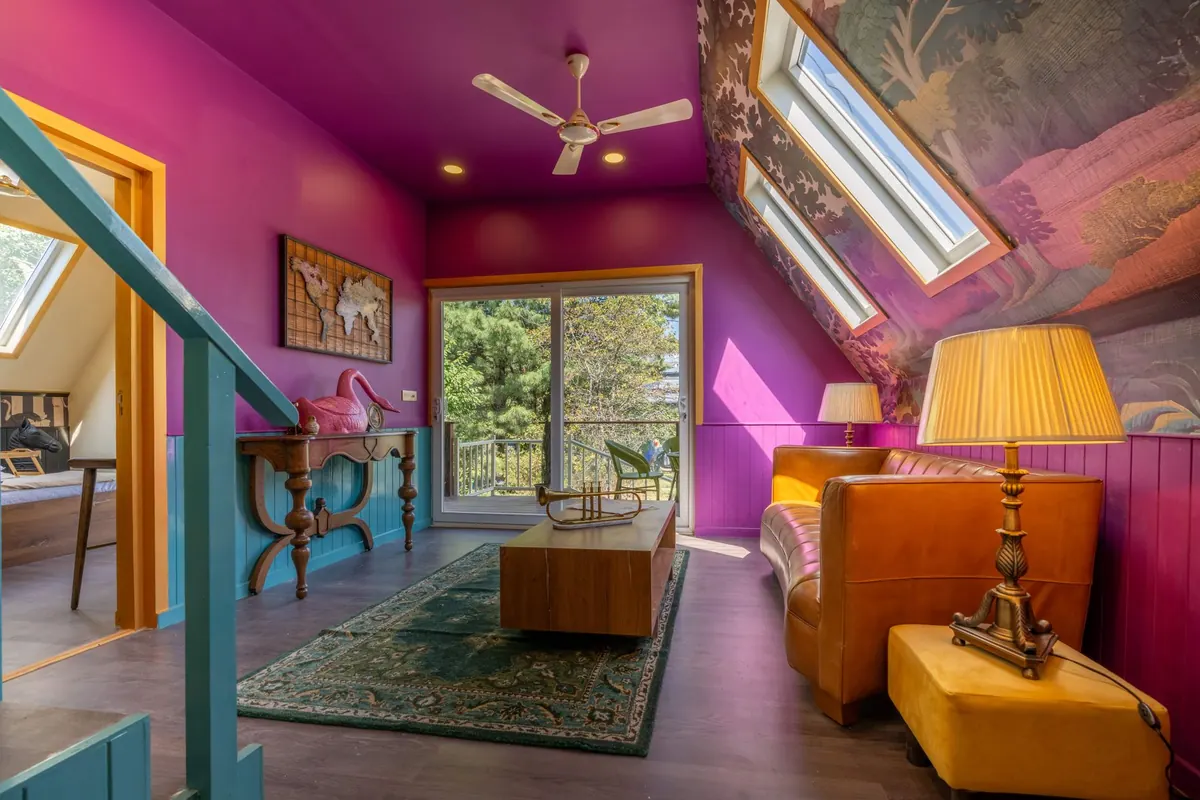
A strong colour on a sloped ceiling can look wonderful in a bright, high room with three windows. In an attic with one, it usually reads as a heavy lid pressing down. The same applies to an accent wall under the eaves — the very surface that is already in shadow is the worst candidate for a deep colour.
If you want colour, put it where the light falls rather than where it doesn't: the flat gable wall, the wall around the window, or a low band below a picture rail. Keep the slope and ceiling the palest tone in the room, and paint the window reveals white so the light bounces off the sides as it comes in.
Then look for contrast that reads as darkness. Painted radiators, pipe boxing and awkward boxed-in beams in the wall colour disappear; left in white against a coloured wall, they turn into bright stripes, and dark joinery turns into dark bands. Either match them to the wall or commit to a clean contrast — the halfway version is what looks untidy.
7. Filling the room with small, busy things
Clutter doesn't just look untidy in an attic; it costs you light. A windowsill crowded with plants, jars and frames blocks the lower part of the glass. A shelf of small objects breaks up the wall into dozens of tiny shadows. Busy patterns on bedding, cushions and a rug absorb light and give the eye nowhere to rest.
Clear the sill and keep it clear. Edit shelves down to a few larger pieces, which cast one soft shadow instead of twenty hard ones. And put a mirror opposite or at an angle to the window, where it will catch the glass and send the view back into the room; a mirror facing a dark corner just doubles the dark corner.
A sensible order to fix things in
Start with the free changes and live with each one for a few days before spending money. The room will tell you quickly which of these mattered most.
- Clear the windowsill, pull the curtains right back and check how much glass is actually exposed.
- Replace cool white bulbs with warm white ones, and add one lamp in the darkest corner.
- Move the tallest piece of furniture off the window wall.
- Hang a mirror where it will reflect the window.
- Swap or shrink the darkest rug.
- Only then consider repainting, starting with the slope and ceiling.
Do those in order and most attics gain a noticeable lift before a single tin of paint is opened.
Photo: Tama66 / Pixabay