The ceiling drops to meet the floor about a metre from the wall, and the chair you pictured—deep, generous, with a tall back—will not sit there comfortably. Low attic rooms ask for a different kind of thinking: not less furniture, but better-chosen furniture, arranged around the geometry you actually have rather than the one you wish you had. Get the proportions right and the slope stops being a constraint. It starts doing real work: gathering the light, softening sound, making a small corner feel deliberate instead of leftover.
Map the ceiling before you buy anything
Start with a tape measure and an honest hour. Walk the corner and note the headroom every 30 centimetres or so, moving from the tall wall toward the low one. You are looking for three zones: where you can stand upright, where you can sit without ducking, and where nothing but storage should go.
Most people put the chair under the highest point. That is usually a mistake. The highest point is where you want to stand, reach a shelf, or let a lamp rise. The chair belongs a little further in, where the slope passes comfortably over your shoulders when you are seated—roughly 90 to 100 centimetres of clearance at the back of your head if you are average height. Sitting slightly into the slope means the ceiling wraps around you at the back rather than pressing down in front of your face.
Keep a 60–70 cm walking strip from the door or the top of the stairs to the nook. If the room is only wide enough for one, choose the nook and accept that you will step around it. A reading corner you never use is worse than a corner you have to squeeze past.
Scale the furniture to the angle
Choose seating with a low back
The single most useful thing you can do is keep the back of the chair under about 75 centimetres. Armless slipper chairs, small tub chairs, and low chaise longues all work under a slope because they leave air above them. Skip wingbacks, high-backed reading chairs with ears, and recliners; they look magnificent in a room with a proper ceiling and oppressive here.
If the low side is very low—under a metre—consider a built-in bench with a deep seat cushion and a wedge of pillows against the knee wall. It uses the dead space instead of fighting it, and it looks intentional in a way freestanding furniture rarely does in an attic.
Keep everything else lower than the chair
A side table should sit roughly level with, or just below, the arm of your chair—around 45 to 55 centimetres for most low seats. A round top is kinder than a square one in a tight corner, because you can walk past it without catching a hip.
For books, work with what the slope gives you:
- Under the knee wall: a run of low, shallow bookcases no deeper than 20–25 cm, or a row of lidded baskets on castors.
- On the tall wall: one or two floating shelves at eye level when standing, so nothing protrudes into the seated zone.
- Beside the chair: a stack of three or four books on the floor as a table, if the room truly cannot take another piece.
Depth matters as much as height. Anything deeper than 35 cm starts to eat the floor you need for your feet and legs.
Use colour to push the ceiling away
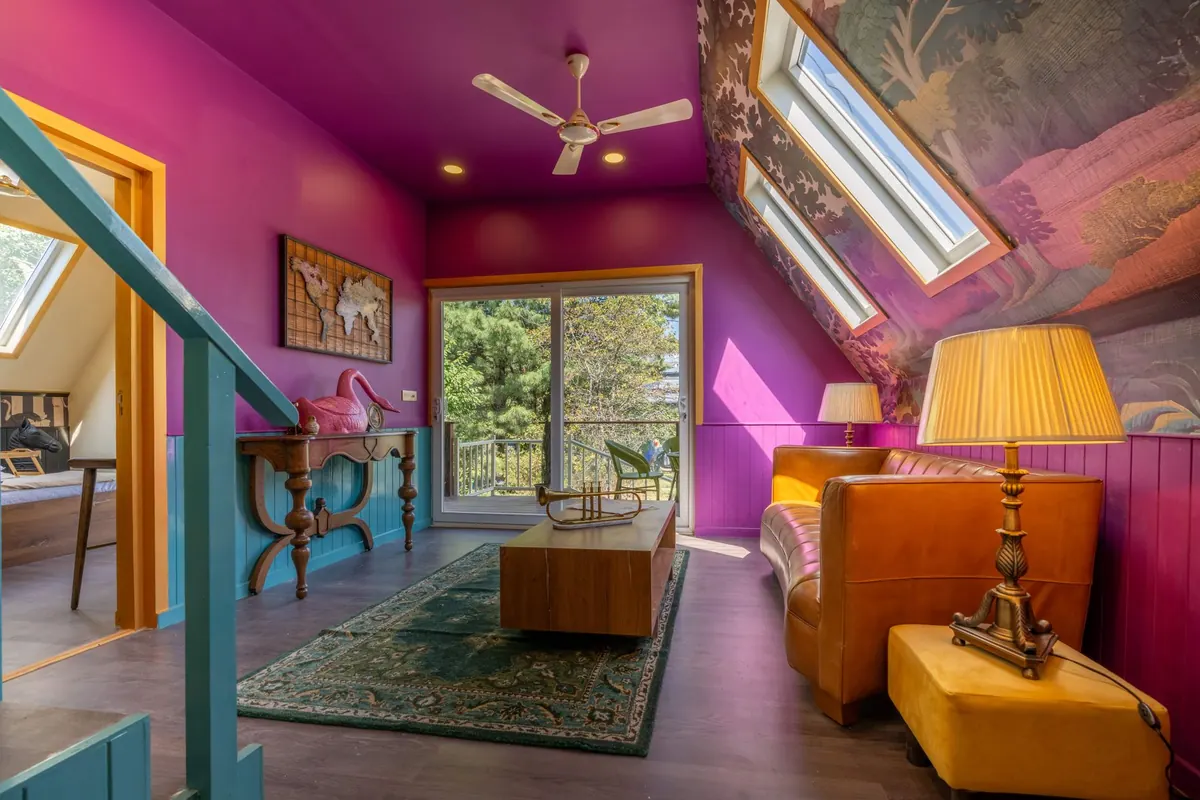
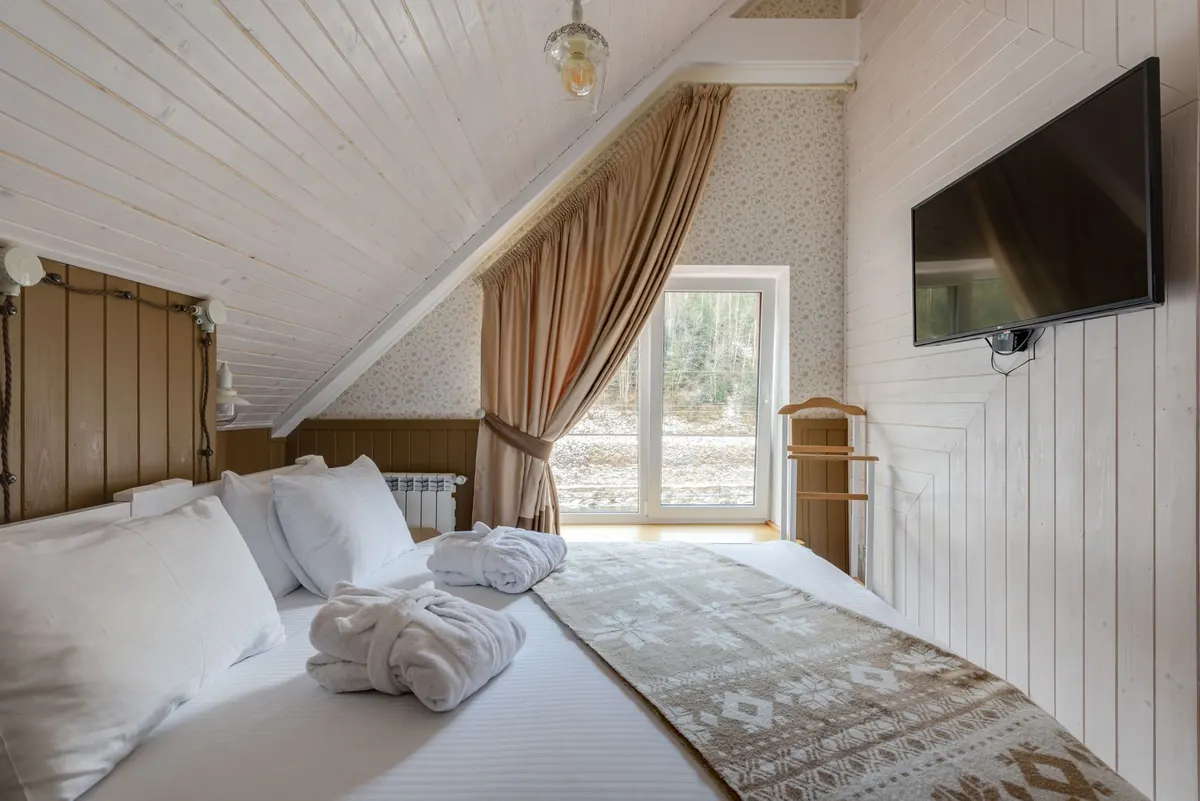
A sloped ceiling painted a different colour from the walls announces itself. The eye reads the angle, then reads it again. Paint the slope, the walls, and usually the ceiling itself in the same tone—or with the ceiling a half-shade lighter—and the planes dissolve into one soft envelope. The room feels taller because there is no line telling you where it stops.
This holds whether you go pale or dark. A chalky off-white, a soft sage, a deep grey-green: saturated tones can make a small attic feel enveloping rather than tight, provided the colour runs uninterrupted over every awkward plane. What you want to avoid is a pale room with one dark accent wall behind the chair; contrast draws attention to the geometry you are trying to smooth over.
Add vertical cues on the tallest wall. Floor-length curtains hung close to the ceiling, a slim mirror, narrow panelling, or a tall, thin plant all pull the eye upward and give the room a sense of height the slope has taken away. Keep horizontal stripes and busy patterns off the low side.
Light the page, not the room
Forget the central pendant. In a low attic it hangs exactly where you need clearance, and it lights the top of your head rather than the book. Build light in layers instead, all of it at seated height or below.
A wall sconce mounted around 100–120 cm from the floor, just behind and to the side of the chair, is the most space-efficient solution. Put it on the opposite side from your reading hand so your own shadow does not fall across the page. Plug-in versions exist for walls where running cable is not worth the trouble; tuck the cord behind the chair or under a rug.
For the reading light itself, aim for a warm bulb—around 2700 to 3000K—and enough output to make the page comfortable without glare, which usually means a shade you can angle and a bulb you cannot see directly. Then add a second, softer source: a small table lamp on the floor, a low shelf light, or even a string of warm lights tucked behind the bookcase. Two weak sources at different heights read as generous; one bright source reads as a spotlight in a small room.
Soften the edges
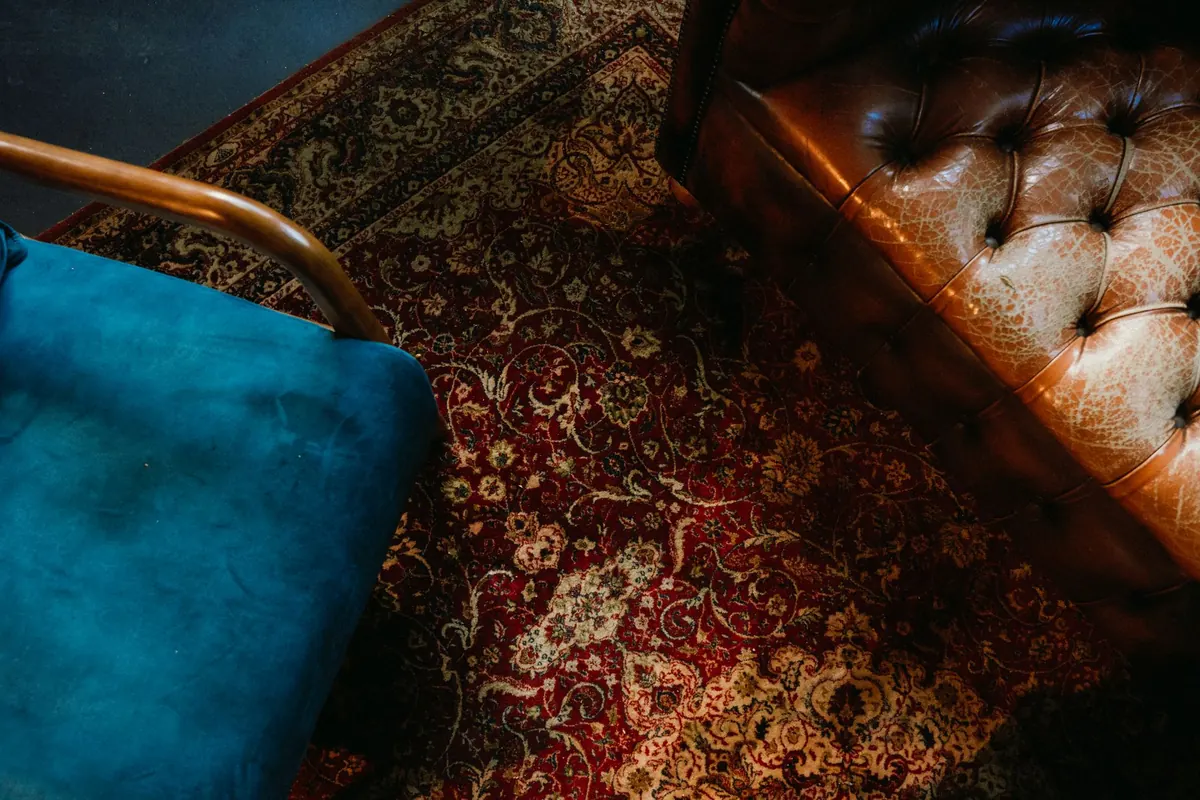
Attic floors are often cold and hard, and small rooms with bare surfaces sound sharp. A rug that reaches under the front feet of the chair—or covers most of the visible floor—changes how the corner feels more than any other single purchase. Wool or a wool-blend wears better than synthetic under a chair that gets used.
Then add absorbency where it counts: a heavyweight curtain, a cushioned seat, two or three pillows rather than six, a throw in a basket. Resist the urge to fill the walls. In a nook this small, one well-edited shelf with a lamp, a few books and a single object looks considered; ten small things look like clutter, and clutter is what makes low rooms feel tight.
A quick check before you commit
- Sit in the chair in the actual corner and read for ten minutes. If you are leaning forward to avoid the slope, move the chair inward.
- Measure the clearance above your head when standing to reach the shelf—not when sitting.
- Check that the lamp switch is reachable from a seated position.
- Confirm nothing blocks the walkway to the door or stair.
- Look at the corner from the doorway at night with the lights on. This is the view that matters.
- Leave one surface empty. Every small room needs a place for a cup, a phone or a pair of glasses.
Live with the arrangement for a week before you paint or drill anything. Low rooms reward patience: the right corner, the right chair height and one good light will do more than a full redesign, and you will feel the difference the first evening you sit down with a book.
Photo: ninosouza / Pixabay